Heavy machinery is one of the fundamental pillars of the construction industry. Its use allows complex jobs to be carried out efficiently and safely, optimizing time, costs, and resources. Knowing the types of heavy machinery used on site helps you choose the right construction machine for each project.
What is meant by heavy machinery
Heavy machinery refers to large, powerful equipment designed to perform demanding tasks such as excavation, loading, transport, land leveling, or demolition. This category includes construction machinery, heavy industrial machinery, and heavy construction equipment used in both public and private works.
These machines are designed and prepared to work continuously, withstanding high mechanical stress and very demanding conditions, even in confined spaces or difficult terrain.
Types of heavy machinery on site according to their function
Heavy earthmoving machinery
Heavy earthmoving machinery is used to excavate, move, and prepare the ground before construction begins. It consists of excavators, bulldozers, and loaders that enable precise clearing, filling, and leveling of land.
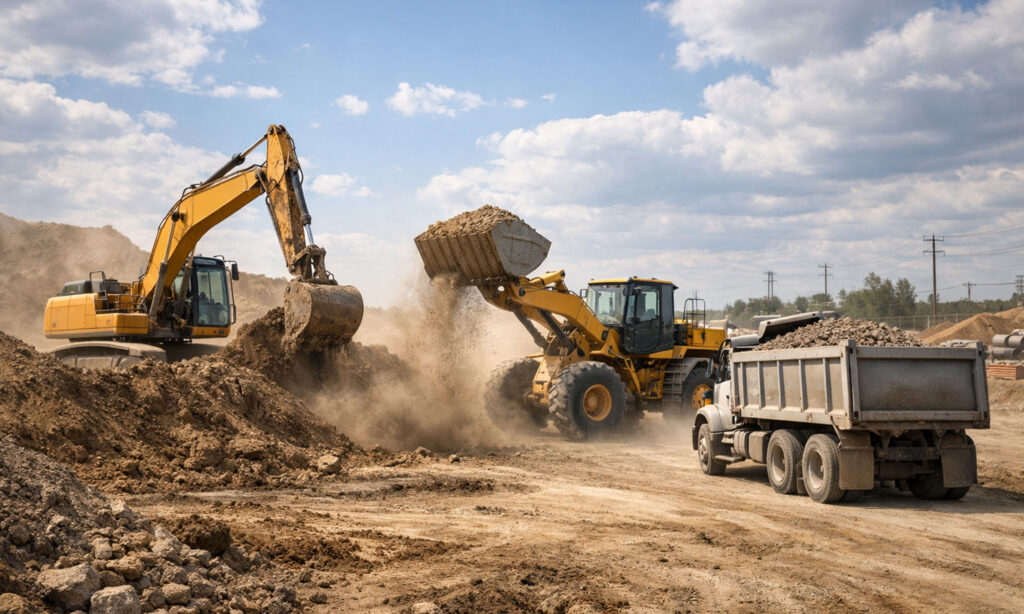
This type of construction machinery is essential in the early stages of any project, as a poorly prepared foundation can seriously affect the subsequent development of the work.
Loading and transport machinery
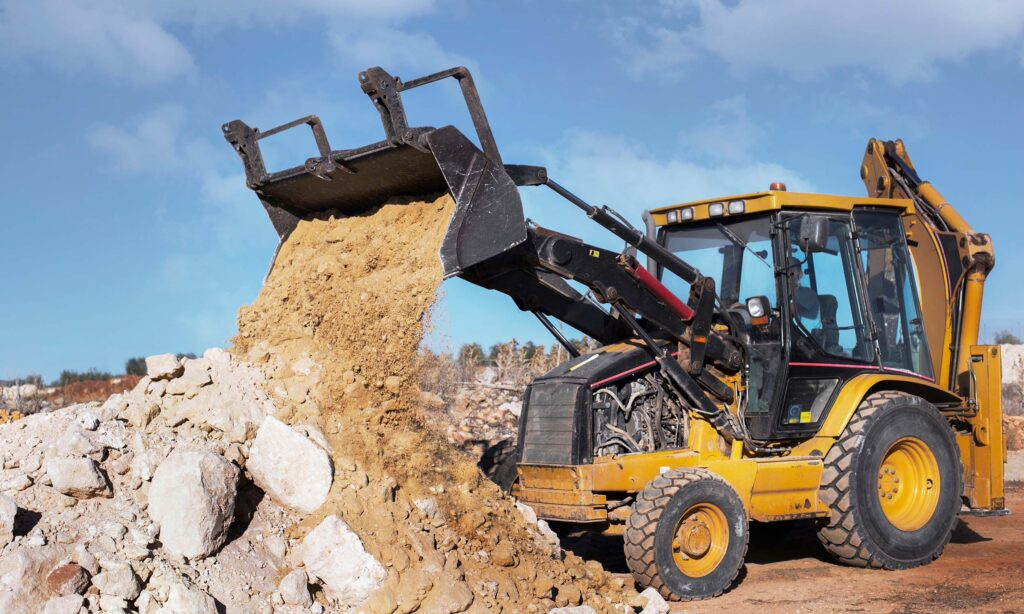
Machinery used for loading and unloading materials on site is very useful for efficient transport and reducing time. Here we can identify equipment such as wheel loaders and dump trucks, which facilitate the transport of earth, aggregates, or rubble, thus significantly improving productivity.
It should be noted that this type of equipment allows for the optimization of workflows and reduction of downtime, especially in large-scale projects.
Lifting and compaction machinery
Public works and civil engineering machinery also requires lifting and compaction equipment. These are used to move materials vertically or compact them efficiently. This includes machinery such as cranes, manipulators, and compactors, which allow work to be carried out at height and ensure ground stability.
Proper compaction is essential to prevent future settlement, while lifting equipment allows heavy loads to be handled more precisely and safely.
Heavy machinery for demolition
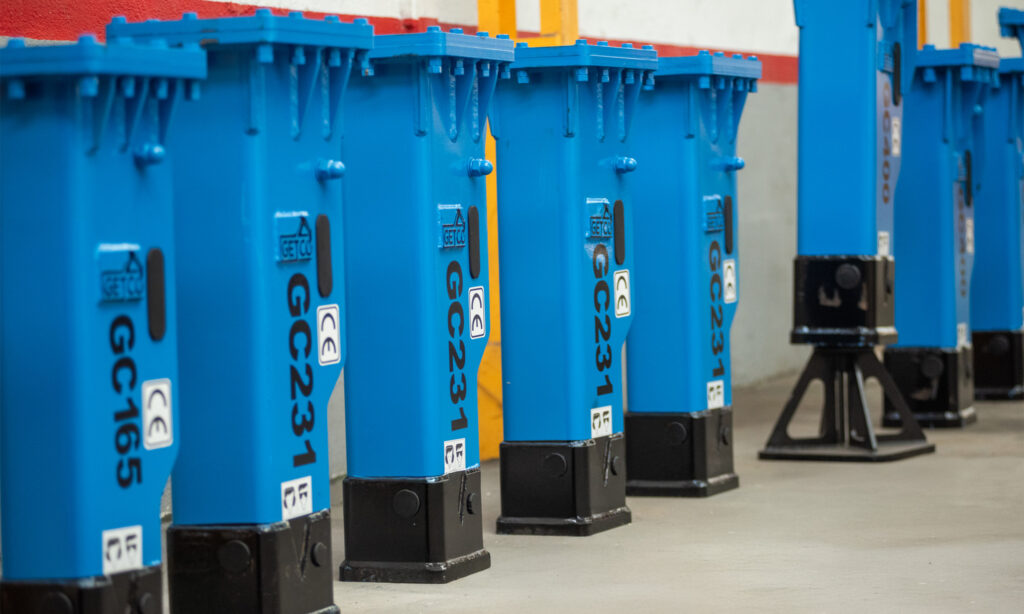
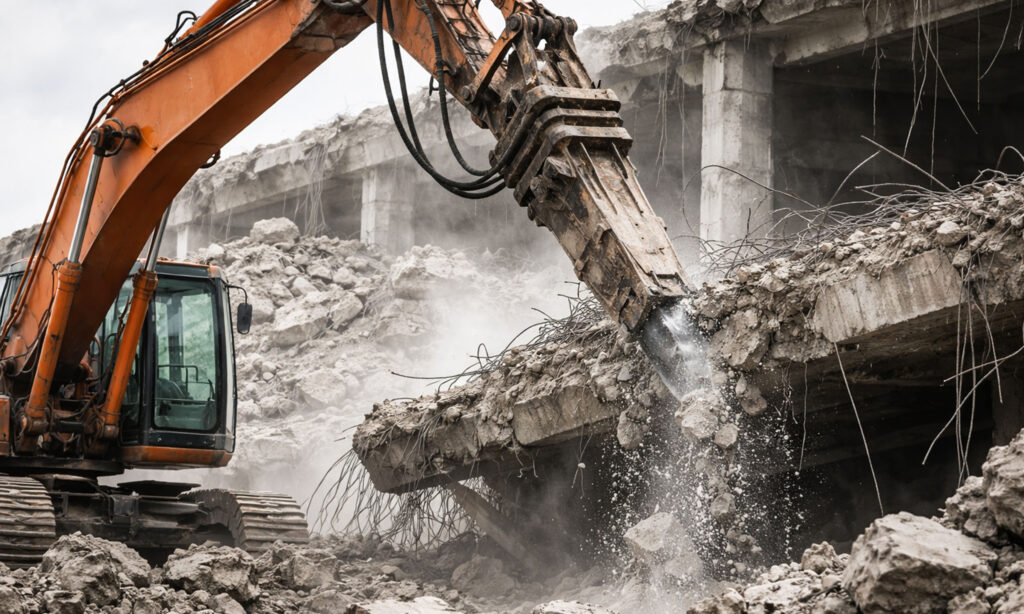
Heavy machinery designed for demolition is built to work on tough structures like concrete and rock. This includes machines like excavators with hydraulic hammers or demolition tools that let you take stuff down safely and in a controlled way.
In these jobs, excavator attachments play a key role, as they can be decisive in terms of equipment efficiency and performance. Excessive effort or inefficient machinery can cause greater wear and tear or breakage of attachments.
Uses of heavy machinery on construction sites
In public works and civil engineering, heavy machinery is used in many different areas. For example, in civil engineering, it is mainly used for roads, bridges, and infrastructure. In construction, it greatly facilitates excavation work, the transport of materials, and the lifting of structures.
In the mining and quarrying sector, heavy machinery also plays a fundamental role. Here, equipment is used intensively, so the durability and high quality of components are key to preventing potential downtime or breakdowns.
In the construction industry, the most commonly used heavy machinery includes excavators, backhoes, loaders, bulldozers, and compactors. Each type of machine serves a specific purpose and must be selected according to the type of work, terrain, and conditions of the job site.
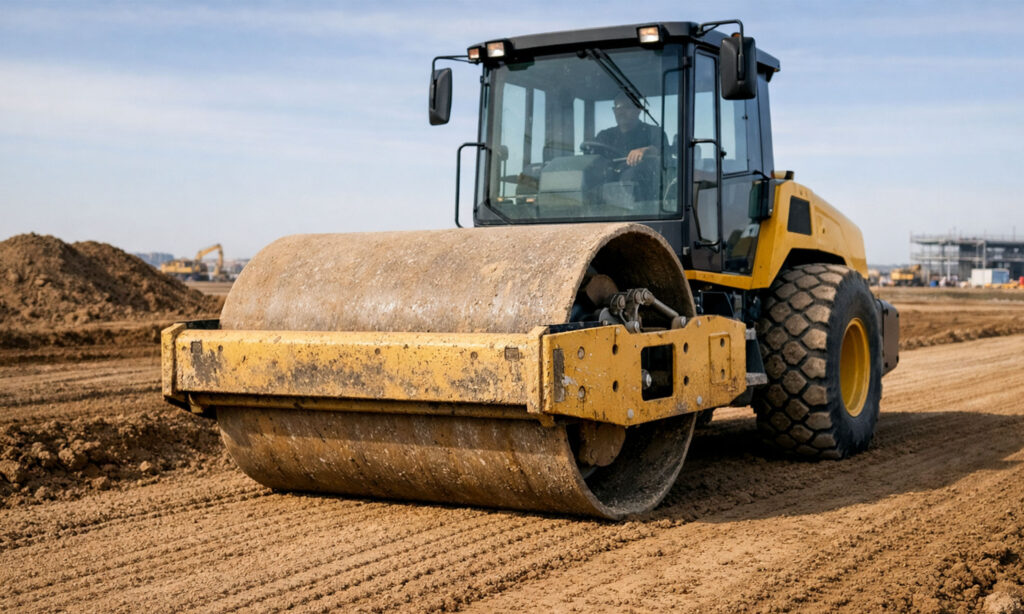
For all these reasons, making the right choice has a direct impact on fuel consumption, productivity, and the safety of construction workers. Here is an article from the INSST on regulations governing work equipment and machinery.
Implements, accessories, and spare parts for heavy machinery
The performance of a construction machine depends not only on the equipment itself, but also on the heavy machinery accessories used. There are various attachments such as hydraulic hammers, hydraulic hammer tips, and other work tools that allow the machine to be adapted to specific tasks efficiently, ensuring timely completion and safety.
In addition, continued use can cause high wear and tear on key components. Therefore, having the right heavy machinery spare parts and wear parts is essential to maintain efficiency, extend the life of the equipment, and, above all, avoid waiting times between spare parts.
A wide range of attachments and spare parts allows you to keep your machinery in optimal condition, reducing costs and avoiding interruptions on the job site.
How to choose the right machinery
Throughout this article, we have seen that when selecting construction machinery, it is important to consider the type of machine, the working environment, the harshness of the work it will face, continuous usage times, the space where it will be used, and other real project requirements. For all these reasons, choosing efficient and safe equipment is important, as it allows you to optimize resources and improve the final results.
Heavy machinery is key in the construction and public works industry, and knowing the types of machinery, their uses, and the most suitable equipment allows you to work more efficiently, safely, and profitably. That is why at IMOP we always encourage you to invest in quality machinery, along with good implements and spare parts. These are an investment that translates into better results, greater durability over time, and reliable equipment with guarantees.
Would you like to learn more about demolition? Here is some information about preventive maintenance for demolition machinery, where you can find out how to extend the useful life of your demolition equipment.