Within the construction sector, it is common to find confusion between the concepts of public works and civil works. Both are closely related to infrastructure construction and different types of construction projects, but they do not have exactly the same definition. Understanding their differences is key for construction companies, technicians, and professionals involved in technical construction projects.
This article clearly explains what public works and civil engineering are, their differences, the most common types of works, the construction phases, and the most commonly used construction machinery in each case.
What is public works?
Public works refer to projects promoted by public administrations, whose objective is the general interest. These are public works intended for collective use, financed with public funds.
This type of construction includes public infrastructure such as roads, sanitation networks, public lighting, and water supply systems. These construction projects require detailed planning and a regulated construction process from start to finish.
Characteristics of public works projects
- Promotion and public management: Public administrations act as promoters of the construction project by conducting feasibility studies and reviewing the conditions for execution.
- Collective use and general interest: Public works projects are aimed at improving basic services, mobility, and urban development.
- Technical and administrative control: Projects are subject to quality control, technical supervision, and regulatory compliance at all stages of public works.
What is civil engineering?
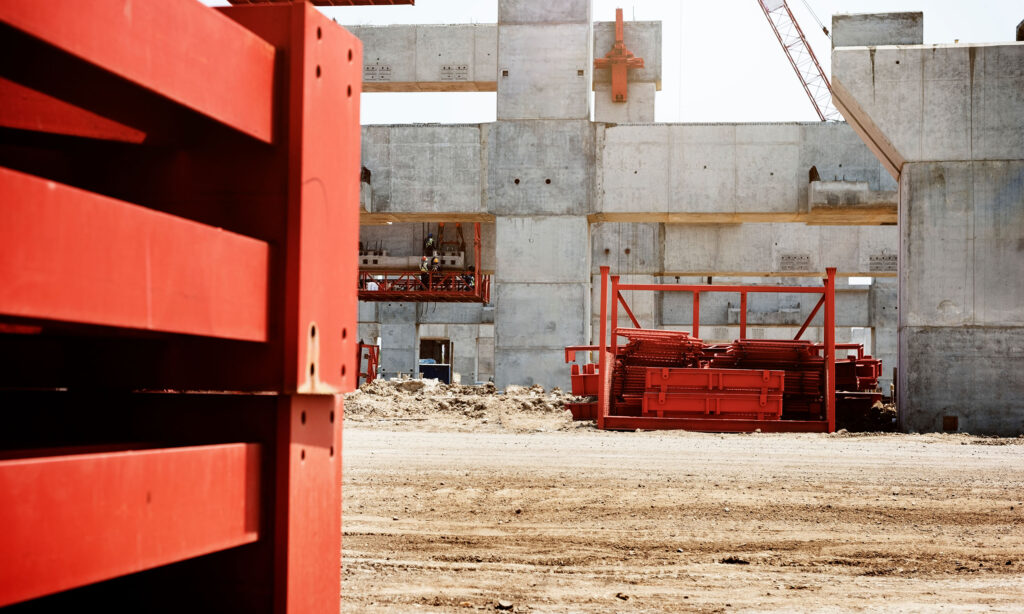
Civil engineering is a broad concept that encompasses all civil construction of large infrastructure projects, regardless of whether the developer is public or private. It focuses on technical execution and engineering applied to complex infrastructure projects and urban development projects.
Civil engineering projects usually involve large-scale works, such as tunnels, dams, industrial infrastructure, or hydraulic works, where the technical level and the use of civil engineering machinery are decisive factors.
Characteristics of public works projects
- High engineering component: Includes civil engineering projects and engineering projects aimed at solving complex structural and construction challenges.
- Large-scale projects: These projects are usually carried out over long periods of time and involve a high volume of construction materials.
- Intensive use of specialized machinery: Efficiency and safety depend largely on the construction machinery and equipment used.
Key differences between public works and civil engineering works
Although both concepts overlap in many respects, there are clear differences between them that should be taken into account.
- Developer and type of project
Public works include projects financed by official bodies and intended for collective use, while civil engineering works encompass both public and private works, provided that they are civil infrastructures with technical complexity.
- Type of construction and scope
Public works usually include road works such as highway construction, urban development projects, or urban public infrastructure projects. Civil engineering, on the other hand, focuses on civil and industrial infrastructure.
Types of public works projects
Public works include different types of projects tailored to social and territorial needs.
Road and urban infrastructure
Road infrastructure projects include highways, access roads, and urban roads. These civil engineering works for transportation require the use of public works machinery and earthmoving equipment adapted to the different phases of construction.
Public services and facilities
Hospitals, educational centers, public lighting, and water supply networks are part of urban development projects and basic public infrastructure. These types of actions aim to guarantee access to essential services and improve the quality of life of the population.
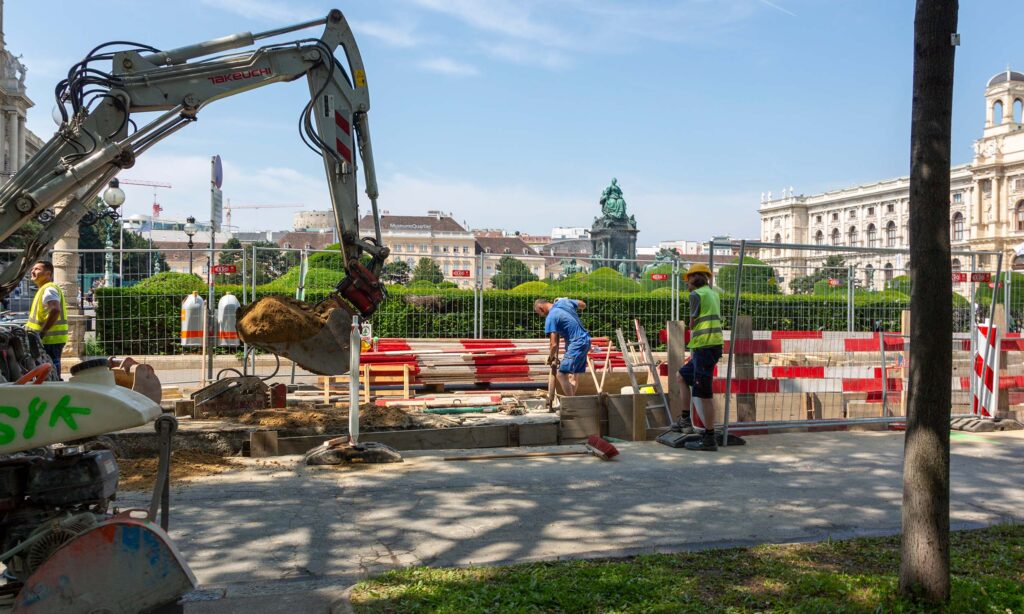
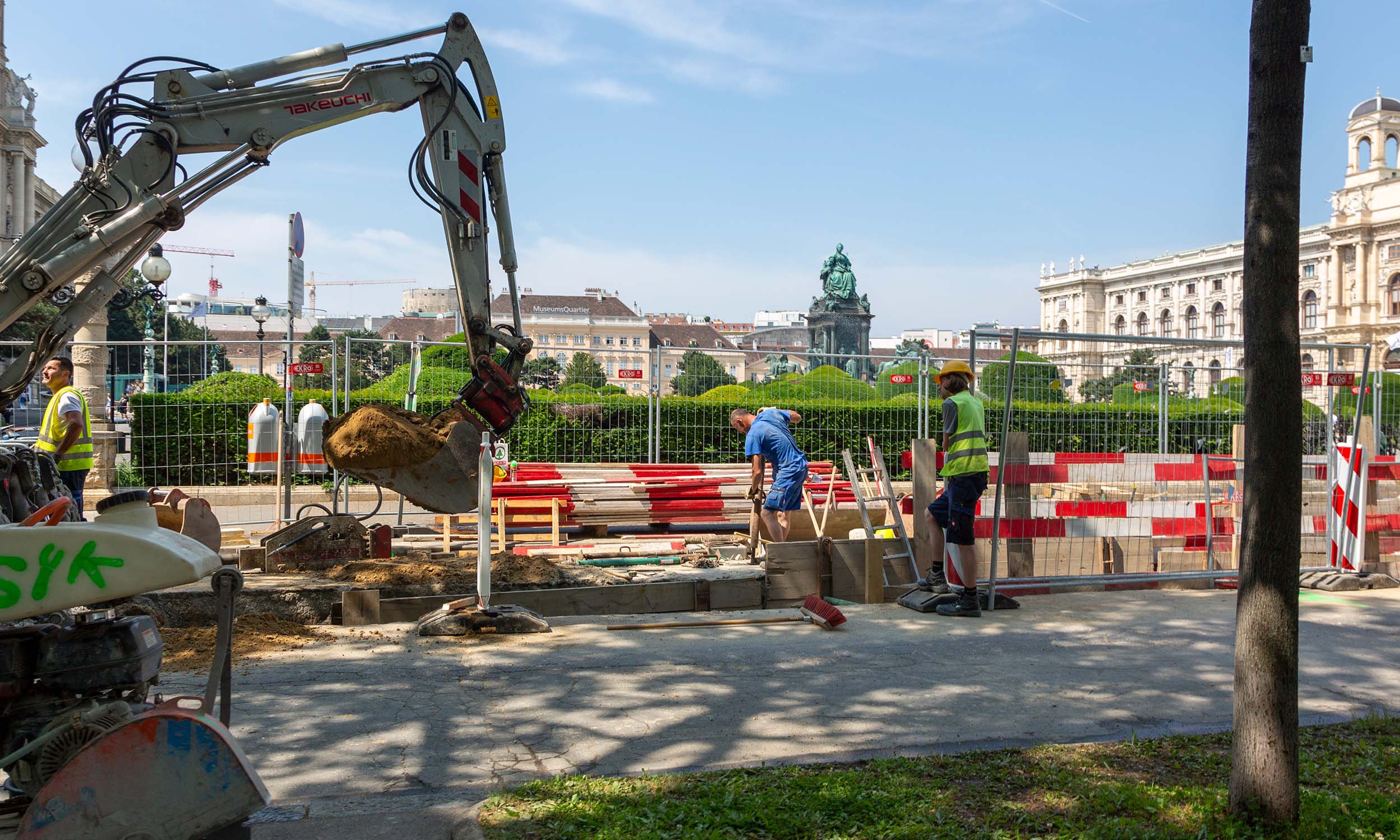
In these projects, it is essential to plan the construction process correctly, as different tasks must be coordinated with tight deadlines and a high level of technical control. In addition, carrying out work in public spaces requires machinery adapted to areas with space limitations.
Types of civil engineering projects
Civil engineering encompasses various construction projects with high structural and technical requirements.
Large infrastructure and hydraulic works
These types of projects usually involve large-scale works, with prolonged phases and a high level of technical specialization. Proper coordination between the different teams is essential to optimize time, reduce risks, and ensure compliance with technical and regulatory requirements.
Industrial infrastructure
These technical construction projects are usually carried out on large sites and therefore require detailed planning of the construction process, from the initial earthworks to the structural execution. In these cases, the execution must be adapted to the productive needs of the environment, prioritizing the strength of the structure and its operational efficiency.
Phases of a construction project
In both public works and civil engineering, projects follow well-defined construction phases.
- Planning and preliminary study: This phase includes various feasibility studies, definition of resources, type of construction, etc. This step is essential for optimizing time and resources.
- Earthworks and structural work: During this phase, the main work is carried out using the earthmoving machinery and equipment necessary to complete the construction.
- Finishing touches and commissioning: The execution of the works ends with technical testing, finishing touches, and project delivery.
Machinery used in public works and civil engineering
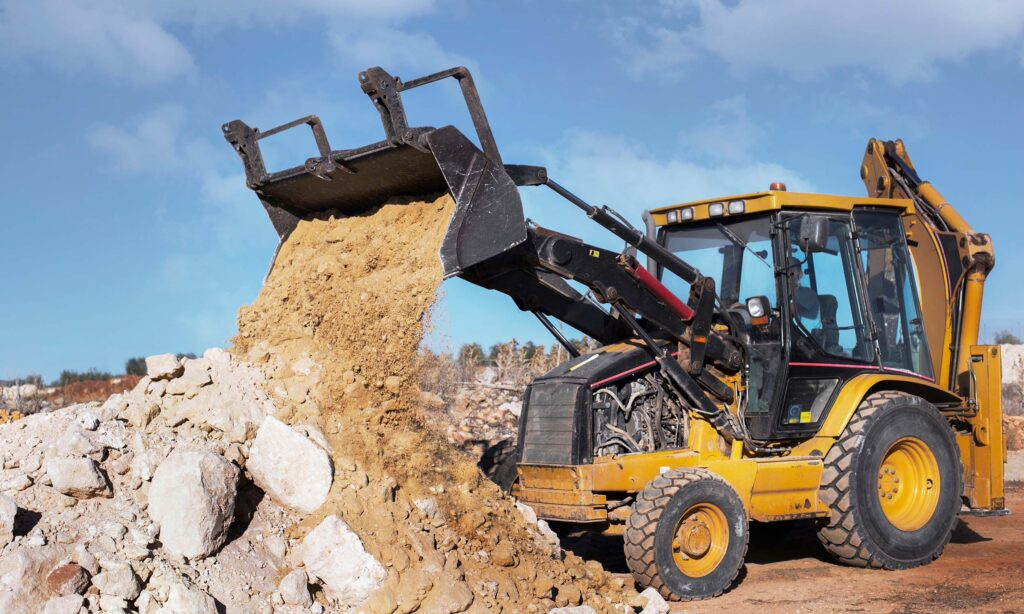
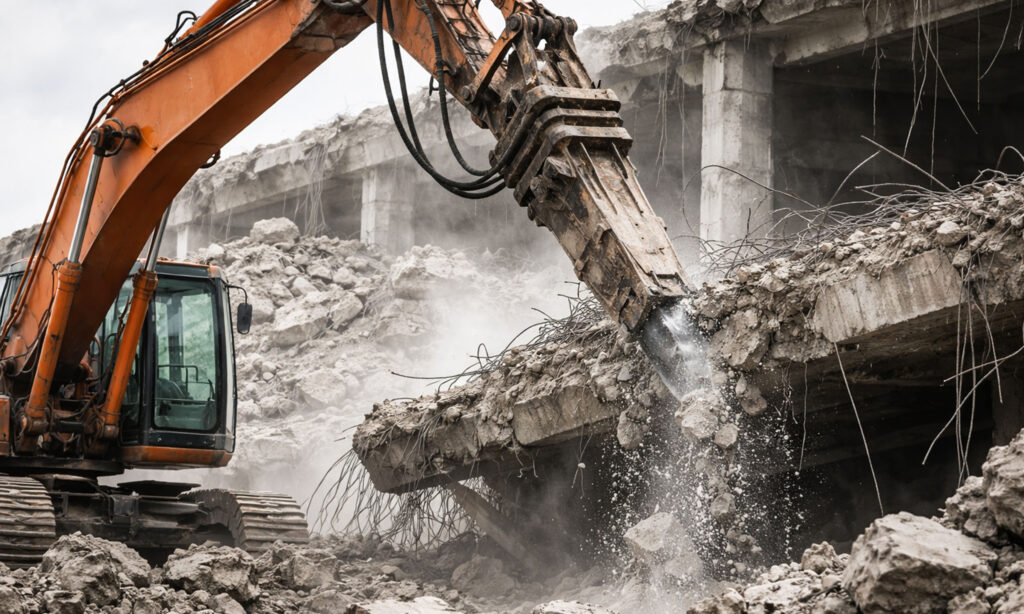
The machinery used in public works is usually versatile and adaptable to different types of projects. On the other hand, the machinery used in civil engineering is designed to withstand heavy loads and work continuously on complex projects.
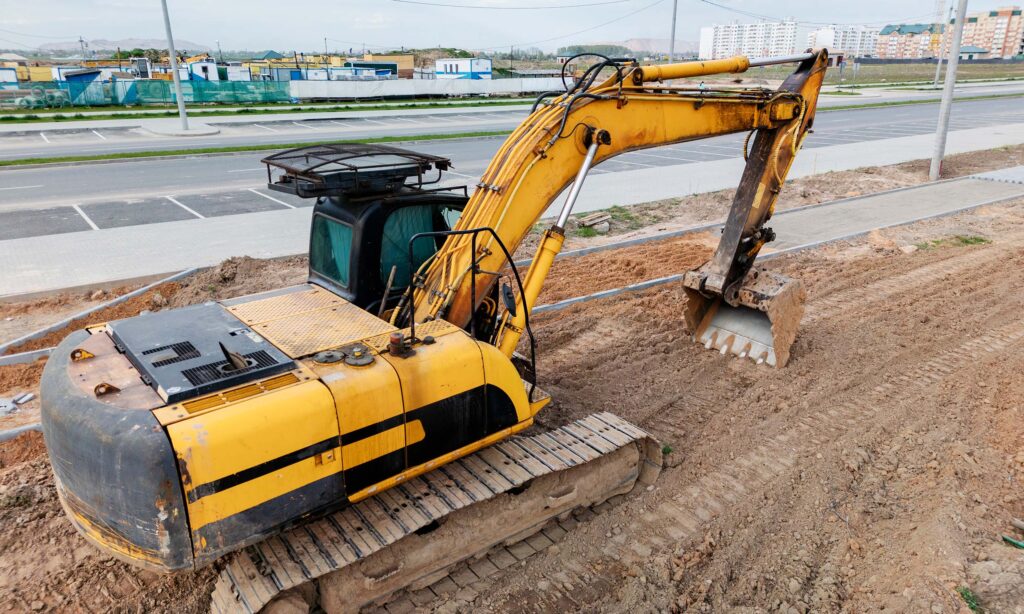
Public and civil works are not only distinguished by who promotes the project, but also by the type of work, its technical complexity, and its scope. Knowing the types of projects and the phases of construction allows construction companies to better plan the execution and select the appropriate machinery for each project.