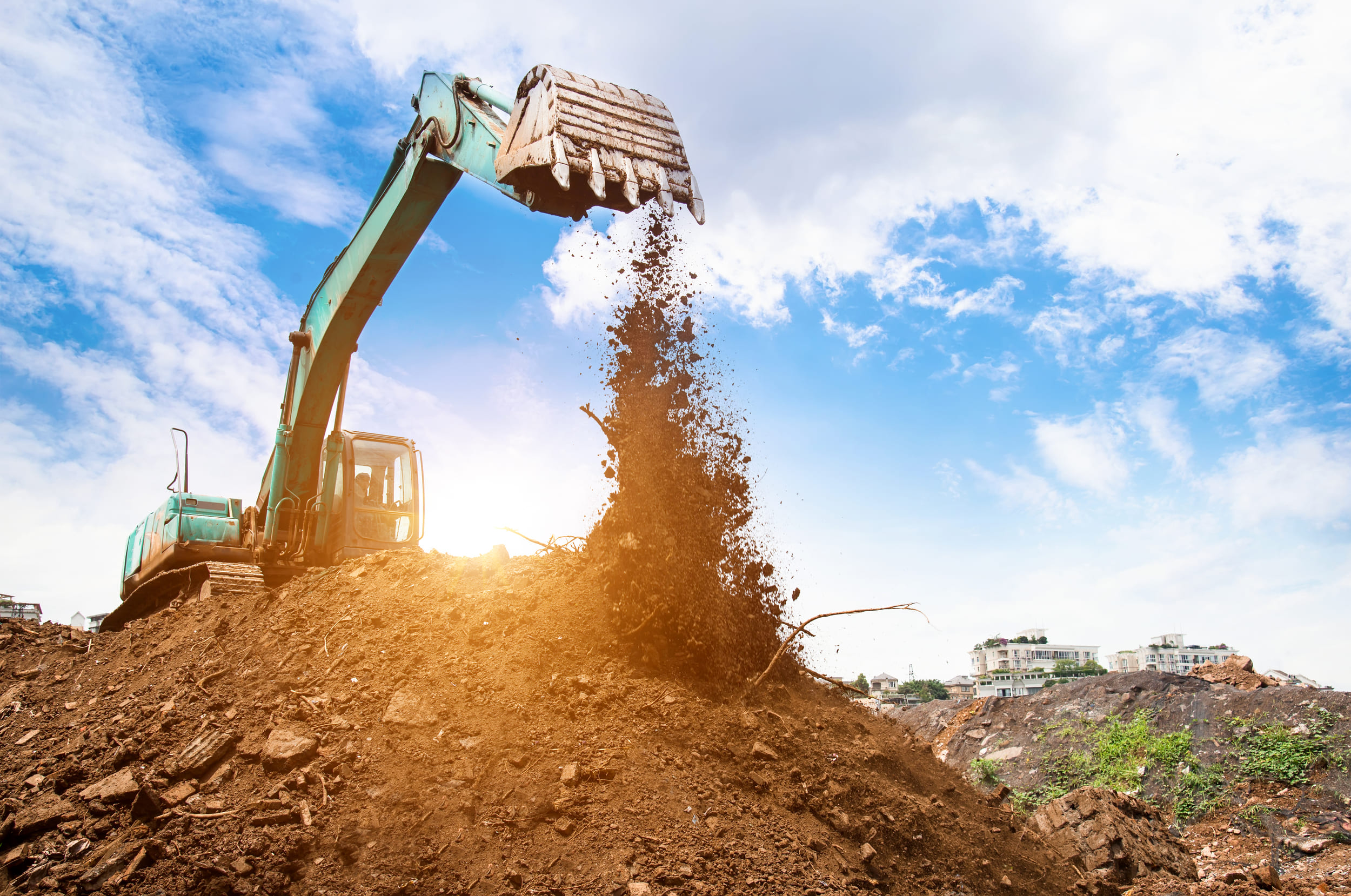
The bulldozer is one of the most widely used machines in the earthmoving equipment category. Its primary function is to push, level, and redistribute material at construction sites, civil engineering projects, and mining operations.
This type of heavy construction machinery is known for its power and track system. Thanks to these features, it can easily operate on difficult terrain such as mud, sand, or uneven surfaces. That is why it is an essential tool for site preparation and large-scale construction projects.
In this article, we explain how a bulldozer works, its components, and its main uses in construction.
What is a bulldozer?
This machine is designed to move large quantities of soil, gravel, or debris using a front blade.
It is one of the most commonly used earthmoving machines on construction sites, especially during the initial phases. Its main function is to prepare the ground before other machines, such as excavators or loaders, are used.
This type of industrial construction equipment is used in sectors such as mining, construction, public works, infrastructure, and land development.
Difference between a crawler tractor and a bulldozer
The crawler tractor is the foundation of this type of machinery. It moves on tracks, which improves stability, traction, and performance on difficult terrain such as mud, slopes, or uneven surfaces.
On its own, this machine can be used for hauling or support tasks on a construction site. When equipped with a front blade, it becomes a bulldozer or earth-moving machine. It is designed to move, level, and redistribute material on the ground.
The main difference lies in their role within the work process. The crawler tractor serves as a base platform, while the bulldozer adds the ability to work directly on the ground using its blade. This difference is crucial in heavy construction machinery, as it determines which tasks each machine can perform in civil engineering or earthmoving projects.
Parts of earth-moving machinery
To understand how this type of equipment works, it is important to know its components.
- Front blade: The front blade is the primary working component. It is used to push soil and level surfaces, making it a key component of earth-leveling machinery and one of the main attachments used on construction sites.
- Track system: The track system, or undercarriage, provides stability and traction. This type of machinery allows for work on difficult terrain where other machines cannot operate easily.
- Ripper or scarifier: This component is located at the rear and is used to break up compacted or rocky ground. It is commonly used in machinery for land clearing and the preparation of hard surfaces.
- Hydraulic system: The hydraulic system controls the movements of the blade and the scarifier. Thanks to this system, the operator can adapt the machine to different tasks on the job site.
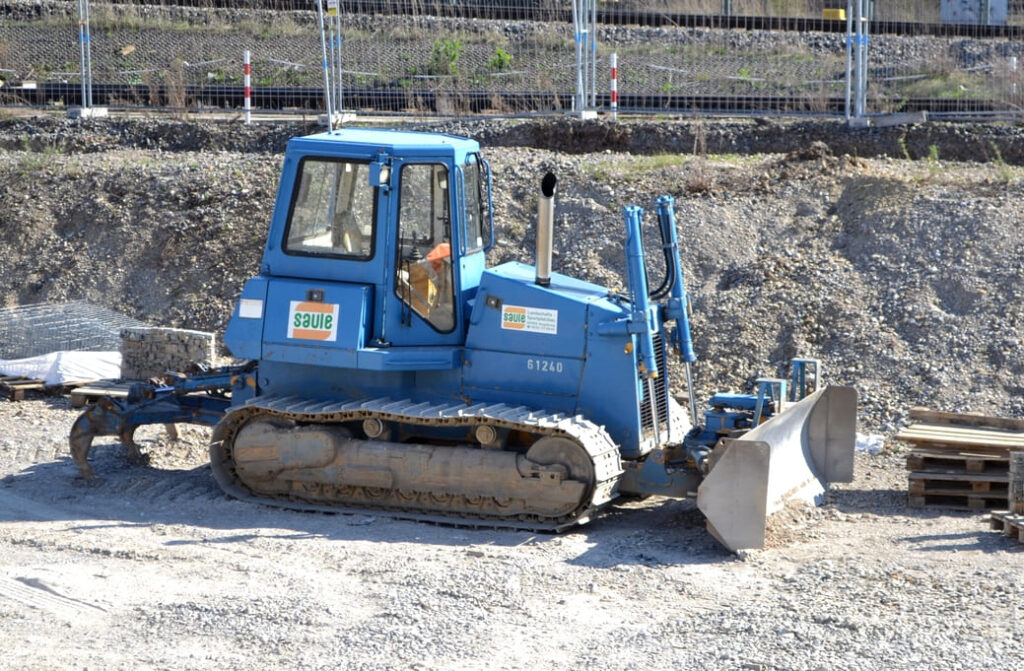
How a Bulldozer Works: Uses and Main Types
This type of heavy machinery uses a controlled thrust system that allows it to operate with precision on various types of terrain.
Its operation is based on three key elements: a high-powered engine, a hydraulic system, and track drive. As the machine moves forward, the blade pushes the material ahead. This allows for quick earthmoving and makes work on the job site easier.
What is it used for in construction?
This type of public works machinery has a wide range of applications in the construction industry.
- Earthmoving. It is used to move large quantities of material and is an essential part of earthmoving equipment.
- Land grading. It is used to prepare surfaces before constructing roads or buildings, and is one of the primary machines used for land grading.
- Road construction. This is used to create access routes on undeveloped land, particularly in projects involving road construction and civil engineering machinery.
- Mining applications. In the mining industry, this type of machinery is used to move large volumes of material, making it a key component of mining equipment.
Types of pushing machinery
There are different types depending on their size and capacity.
- Compact equipment. Compact equipment is ideal for working in tight spaces or on smaller-scale projects where greater maneuverability is required.
- Medium-sized equipment. Medium-sized equipment is the most commonly used in construction and earthmoving, as it offers a good balance between power and versatility.
- Large-scale equipment. This equipment is used in mining and in heavy construction machinery, where large volumes of material need to be moved.
Differences from other construction machines
Among excavation and grading equipment, each machine performs a specific function depending on the type of work.
The excavator is used to dig and remove material. The loader is used to pick up and load soil or debris. And the motor grader is used to perform precise grading.
In contrast, this earth-moving equipment is designed to push and redistribute material on the ground. That is why it is essential in the early stages of construction.
The bulldozer is a key machine in the civil engineering and earthmoving sectors. Its power, stability, and pushing capacity make it an indispensable tool in construction, mining, and large-scale projects.
If you need replacement parts, attachments, or solutions for heavy machinery, IMOP offers expert advice and readily available inventory to keep your equipment running smoothly.